
Matcha latte recipe: hot and iced, exact ratios and café mistakes
The recipe for a perfect matcha latte at home: exact matcha, water and milk ratios, hot and iced versions, which milk froths best and why most cafés get matcha lattes wrong.
A perfect matcha latte holds three layers of truth: 2 g of good matcha, 60 ml of water for whisking and 150–180 ml of frothed milk. There's nothing else in it – which is exactly why nothing can hide. When a café uses stale powder or boiling water, you know on the first sip. And at home you can do it better than most places, for a fraction of the price, in three minutes.
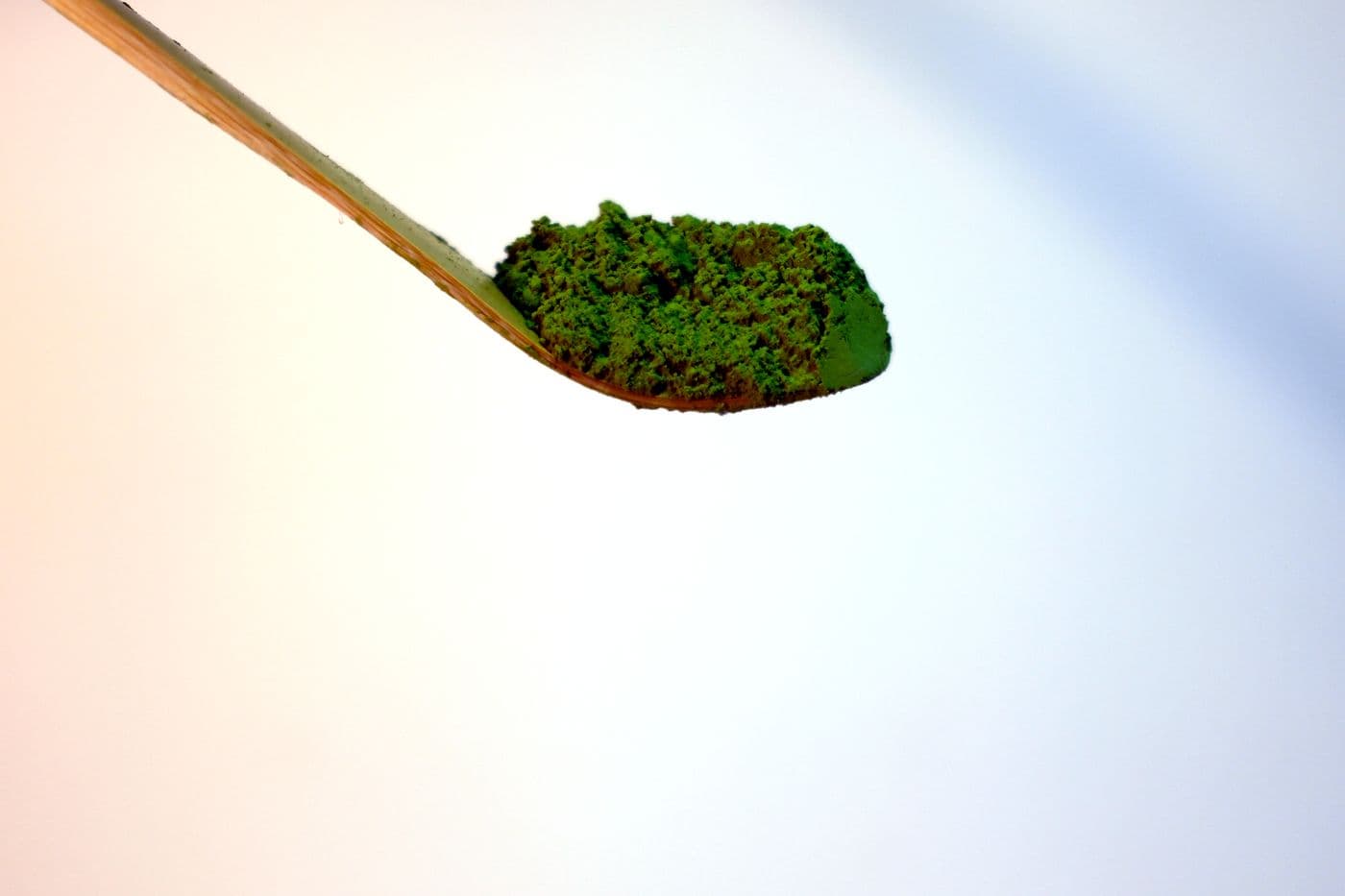
Hot matcha latte (1 serving)
You'll need: 2 g ceremonial matcha · 60 ml water (80 °C max) · 150–180 ml milk · optionally a teaspoon of honey or maple syrup
- Whisk the matcha in water. Sift 2 g of powder, add 60 ml of hot (not boiling!) water and whisk with a chasen or frother into a smooth, foamy base – usucha. Full details plus whisk-free tricks are in our matcha preparation guide.
- Froth the milk. Heat to ~60–65 °C and froth – with a frother, a french press (pump the plunger fast) or a whisk. You want fine microfoam, not a stiff cappuccino peak.
- Combine. Pour the matcha base into a cup, then slowly pour the milk over a spoon so the layers meet nicely. Sweeten only after tasting – good matcha has its own natural umami sweetness, and honey should underline it, not shout over it.
Iced matcha latte (the summer classic)
The iced version gives matcha one extra advantage: cold water pulls no bitterness out of it at all. That's why iced matcha lattes taste smooth even to people who don't get along with hot green teas.
- Put 2 g of matcha and 60 ml of cold water in a shaker or a jar with a lid. Shake hard – 20 seconds.
- Fill a tall glass with ice, pour in 150 ml of cold milk.
- Slowly pour the matcha base on top – you get that famous green-and-white Instagram gradient. Stir and drink.
Which milk is best?
- Oat (barista edition) – matcha's best friend. Naturally sweet, froths beautifully and lets the green flavour shine. If you spot "oat matcha latte" on a café menu, it's no coincidence.
- Whole cow's milk – the classic with rich foam. Milk protein rounds off matcha's taste a little – some like that; purists go plant-based.
- Soy – froths brilliantly, neutral in taste.
- Almond and coconut – they work, but bring strong flavours of their own; coconut pushes the latte towards dessert territory.
Why café matcha lattes often disappoint
The three most common sins – all easy to avoid at home:
- Culinary matcha in a drink. The cheaper kitchen grade is deliberately bitter – great in a cake, a disaster in a latte. At home you drink ceremonial; we explain the difference here.
- Boiling water from the espresso machine. Steam wand water runs over 90 °C – it scorches matcha in a second. At home you control the temperature.
- Powder that's been sitting open for weeks. Matcha loses colour and aroma fast once opened. A café with slow turnover makes lattes from a memory of matcha. At home you finish the tin while it's alive – and when you buy freshly ground from a drop, you start from a whole different level.
Quick home latte maths
A 30 g tin makes ~15 latte servings. With our matcha at 39 €, one at home costs you ~2.60 € including milk – a café one runs 4.50–6 €. The taste difference? Home wins, because you control all three variables: powder, temperature, freshness.