
How to prepare matcha: a beginner's guide (whisk optional)
How to make matcha at home step by step: the right water temperature, dosage, whisking with a chasen, plus tricks that need no tools. And the most common mistakes that ruin the taste.
You can master matcha in two minutes, with nothing you don't already have in your kitchen. The whole secret is three numbers: 2 grams of powder, 70–80 ml of water, 80 °C max. The rest is whisking – and for that, a bamboo whisk, a milk frother or a plain shaker will do. Let's go step by step.
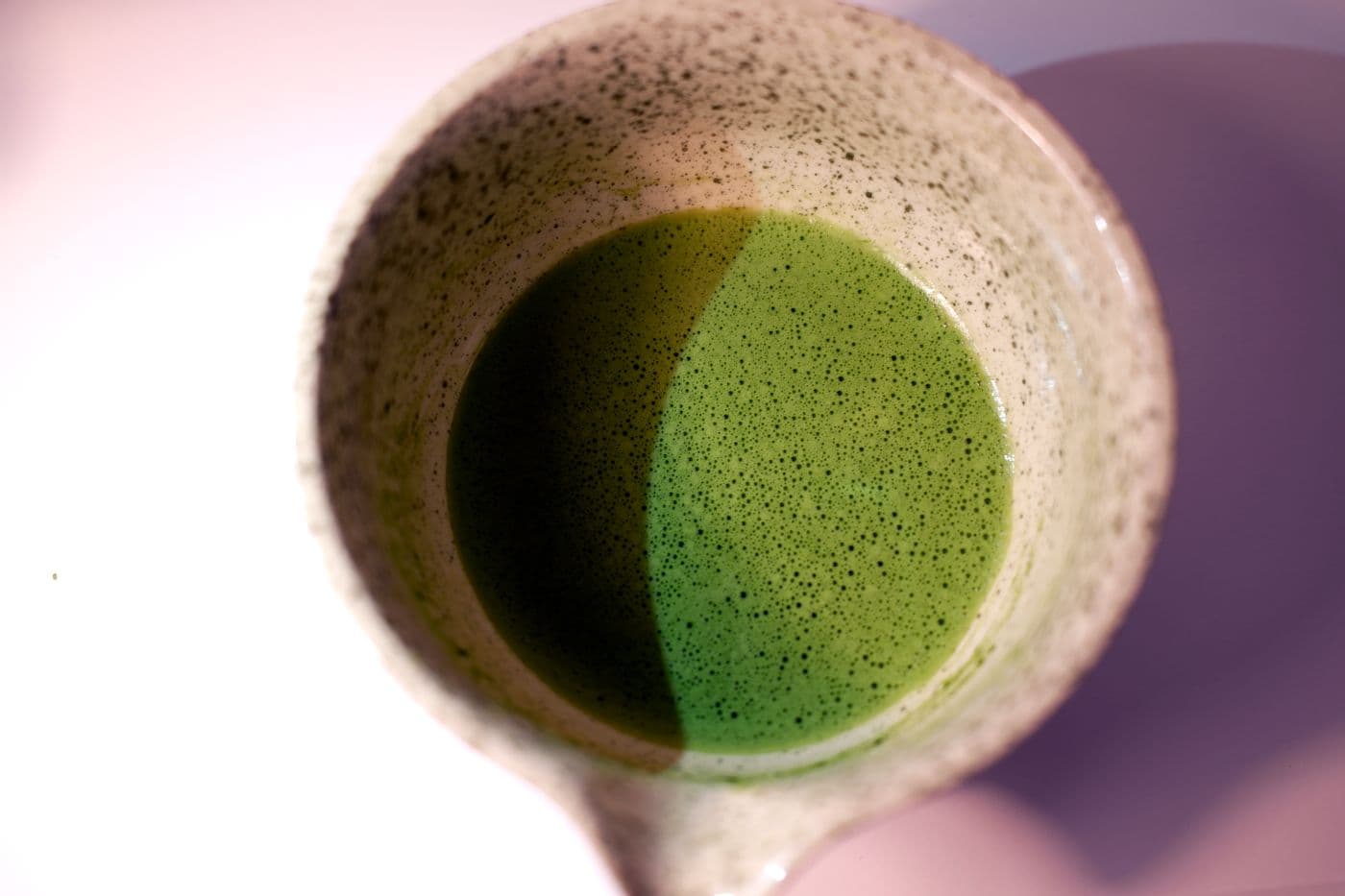
What you'll need
- Matcha – ceremonial, ground as recently as possible (why that matters)
- Water – hot, but not boiling (70–80 °C)
- Something to whisk with – a bamboo chasen whisk, an electric milk frother or a shaker
- A bowl or mug with a wide base
- Optionally a sieve for sifting the powder
Step by step
- Sift 2 g of matcha (a level teaspoon) through a sieve into your bowl. Sifting breaks up clumps – the powder is so fine that static electricity loves to stick it together. You can skip this step, but the foam comes out prettier with it.
- Add a splash of water and make a paste. Pour in just ~20 ml of water first and stir the powder into a smooth, lump-free paste with circular motions. This is the trick beginners miss most.
- Top up the rest of the water – 70–80 ml total at 70–80 °C. No kettle with a thermostat? Let boiled water sit for 2–3 minutes and you're there.
- Whisk into a foam. Use fast strokes in a W or M shape (not circles!) for about 20–30 seconds, until a fine foam with tiny bubbles forms. Circling just spins the water – the W motion is what gets air into it.
- Done. Drink it right away, while the foam is alive. Pure matcha prepared this way is called usucha – "thin tea", the everyday standard.
No whisk? No problem
The bamboo chasen whisk is the classic and makes the prettiest foam, but it's not a requirement:
- Electric milk frother (the stick kind, a few euros) – 15 seconds and you get foam almost as good as a whisk's. Best value for a beginner.
- Shaker or a jam jar with a lid – matcha + cooler water, shake hard for 20 seconds. Perfect for iced matcha in summer; never put hot water in a shaker.
- Blender – works for bigger batches, like when you're making matcha lattes for a crowd.
The only thing that genuinely doesn't work is a plain spoon – it doesn't disperse matcha in water, it just gets it wet. The result: clumps and sediment at the bottom.
Usucha vs. koicha – two methods, one matcha
Usucha (thin tea) is what we made above: 2 g to 70–80 ml, whisked into a foam. Koicha (thick tea) is the ceremonial version: double the powder in half the water, not whisked into foam but slowly kneaded into a thick, almost syrupy texture. Save koicha for truly top-tier first-harvest matcha – it lets you taste everything the powder holds, with zero compromise.
The most common mistakes (and how to fix them)
- Boiling water → bitter matcha. Fix: a thermostat kettle, or 2–3 minutes of patience.
- Whisking in circles → no foam. Whisk in a W, from the wrist, lightly.
- Too much powder – more isn't better. 2 g is the proven standard; a stronger dose skews the taste towards bitter.
- Old matcha – powder that sits open in a cupboard for months loses colour and flavour. Store it airtight, cool and dark, and use it within a few weeks of opening. Better to buy less, more often – freshness counts from the milling date.
- Hard tap water – in regions with very hard water, the taste goes dull. Filtered or soft spring water makes a surprising difference.
What about matcha lattes?
Matcha + frothed milk is a chapter of its own – ratios, the iced version and the mistakes cafés make are all in our recipe for the perfect matcha latte.